
Last updated November 23, 2026
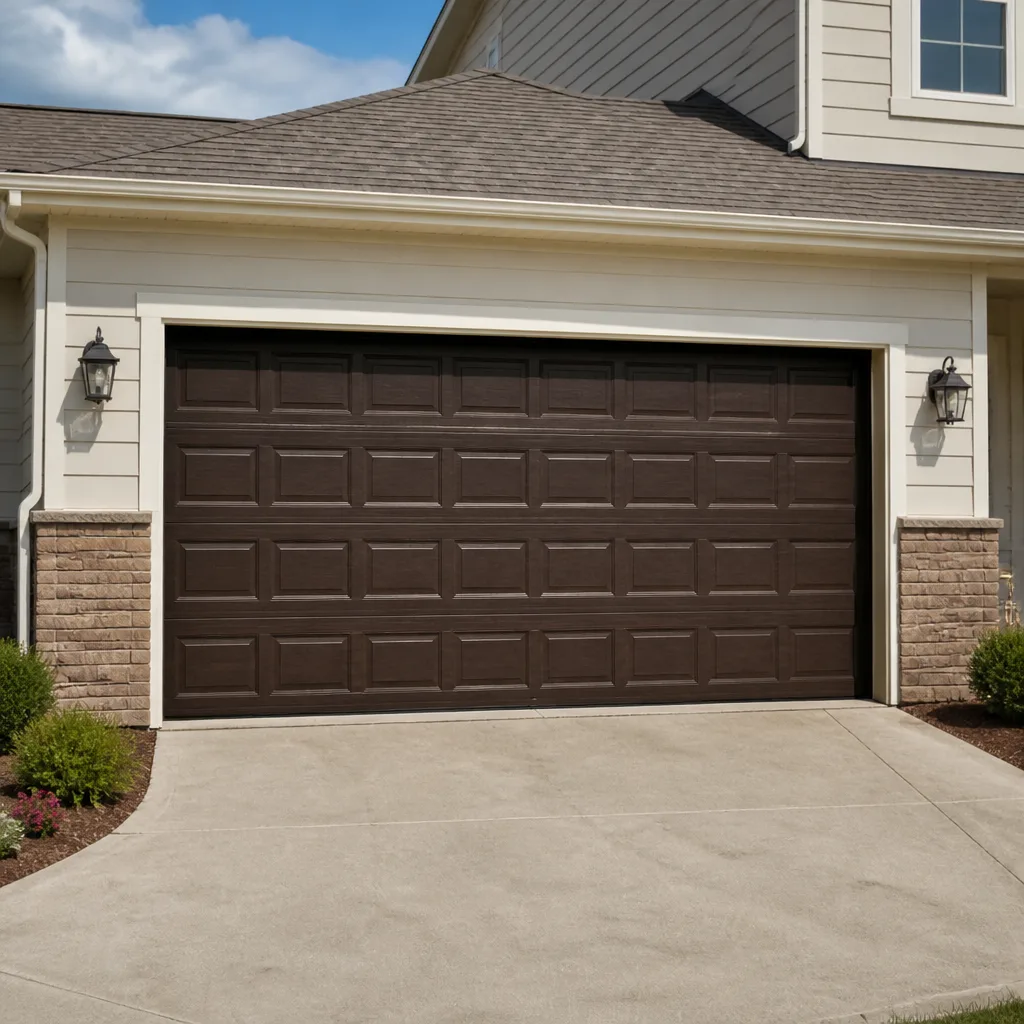 Raised-panel steel
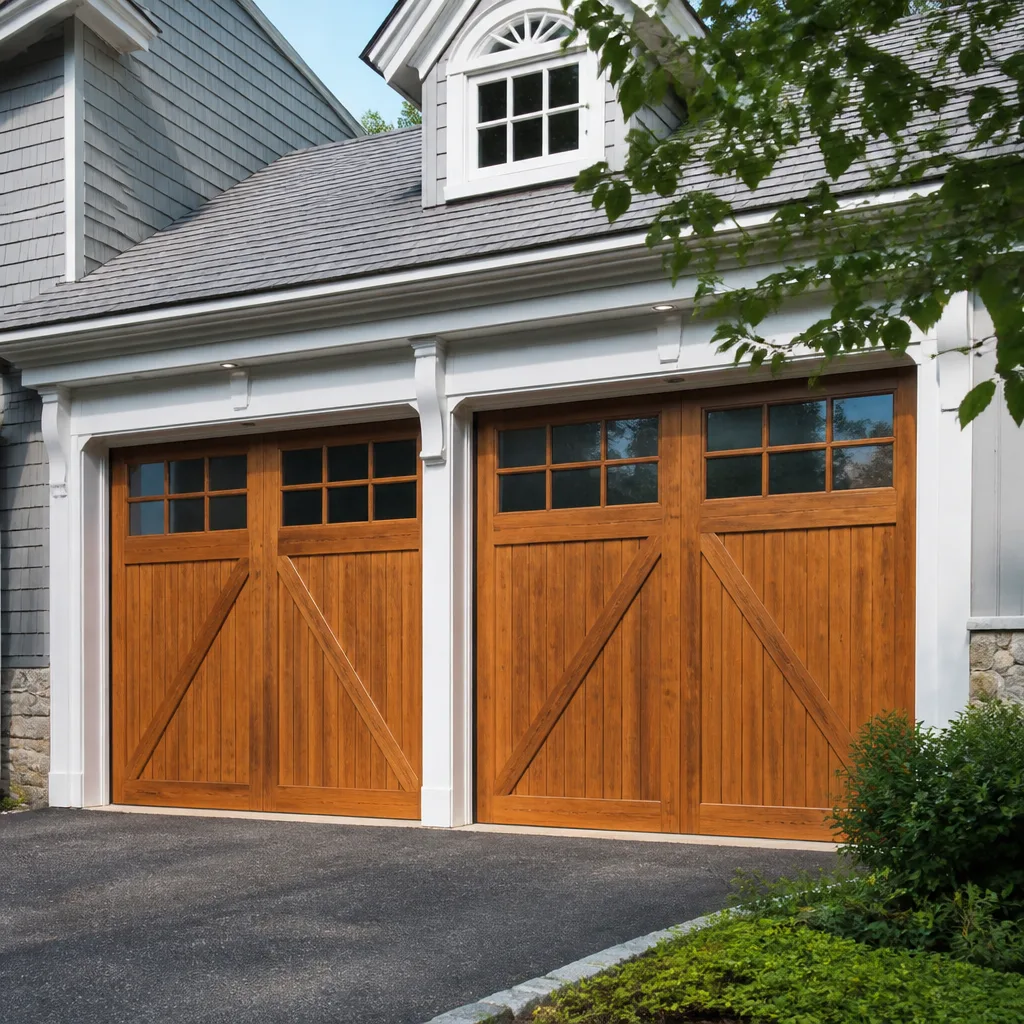 Carriage house
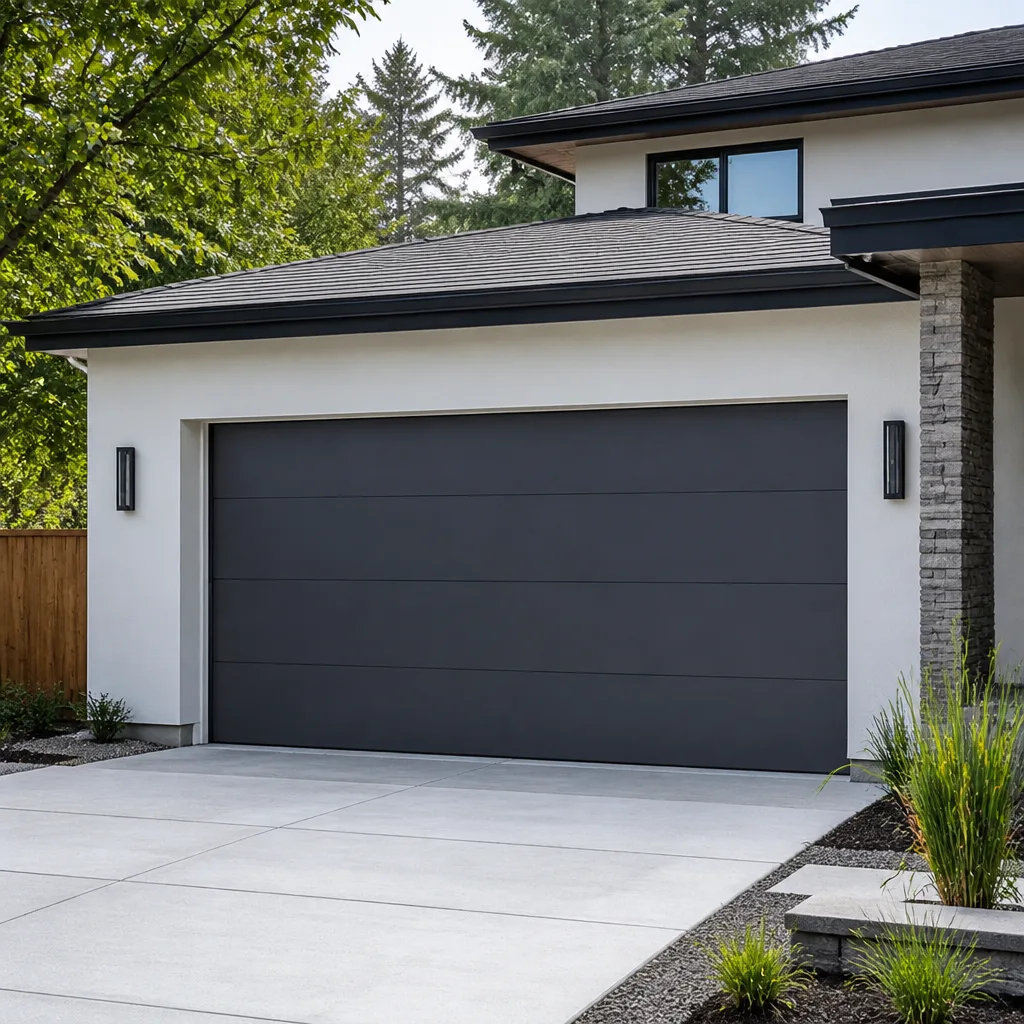 Modern flush
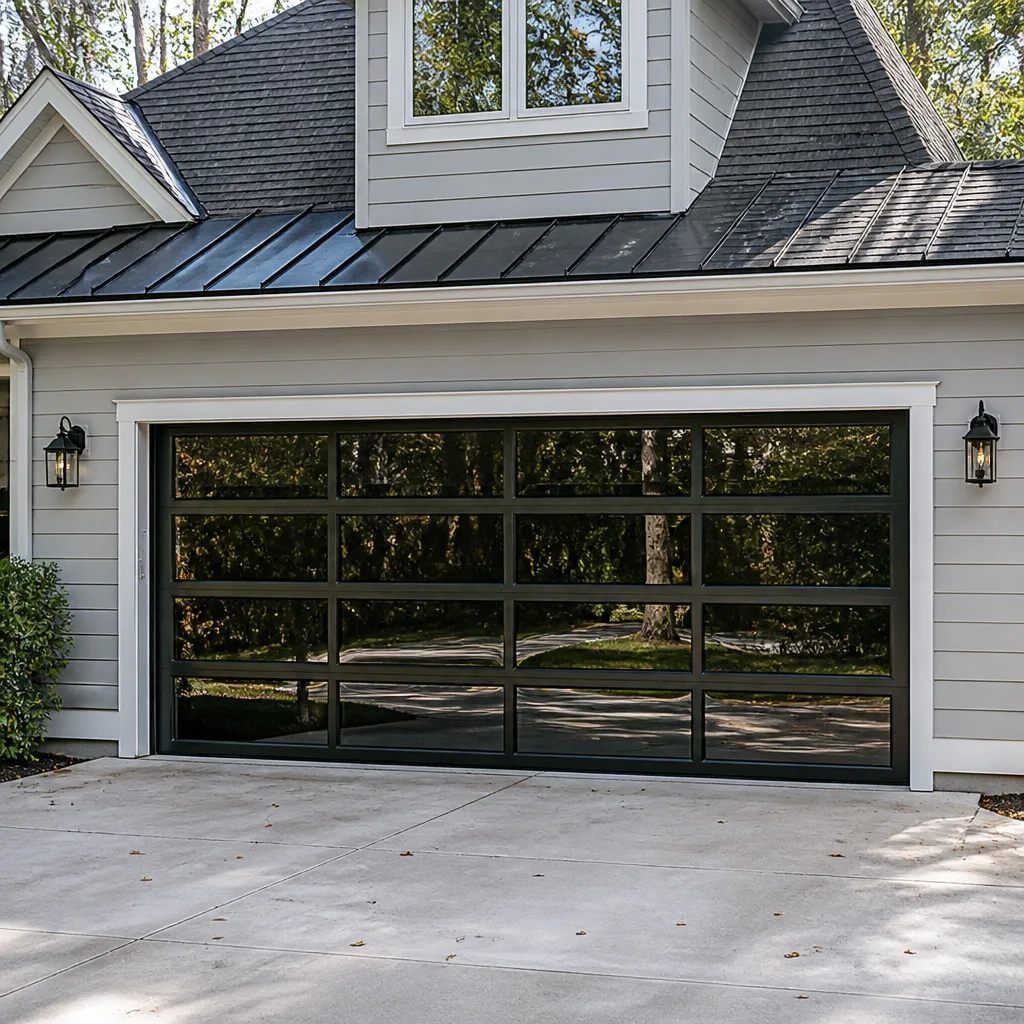 Full-view glass
 LiftMaster openers
 Chamberlain openers
Full 25-point door and opener safety check with every visit - springs, cables, rollers, tracks, and your LiftMaster or Chamberlain opener included
You get a price before we start. It does not change when the pro arrives.
Get your free estimateDIY vs Professional Garage Door: The Fruit Cove Homeowner’s Decision Guide
Most homeowners assume the DIY-versus-pro question comes down to how handy they are. For garage doors, that framing misses the point. The real dividing line isn’t skill, it’s consequence: which tasks can hurt you, which ones can invalidate a wind-mitigation insurance credit, and which ones quietly break Florida permit and HOA rules. A door that runs smoothly on a Sunday can still fail an inspection or a renewal review months later.
This guide sorts the work into what’s genuinely safe to handle yourself, what isn’t, and what a realistic cost comparison looks like for the five most common jobs in Fruit Cove. You’ll finish knowing exactly where the amateur line sits and how to prep a job so a professional spends less time on it.
Quick Answer
On a garage door in Fruit Cove, routine maintenance, lubrication, visual checks, and replacing a wall-mounted opener remote are safe DIY territory. Torsion spring replacement, cable work, track realignment on a loaded door, and any new installation are not. Those carry stored mechanical energy or wind-load compliance obligations that make professional work the cheaper and safer choice once you count mistakes, permits, and insurance. If the spring is broken or the door won’t close, stop and call a specialist.
Styles & brands we work with
- Raised-panel steel
- Carriage house
- Modern flush
- Full-view glass
- LiftMaster openers
- Chamberlain openers
Table of Contents
- Where the DIY Line Actually Sits
- Task-by-Task: Safe DIY vs Professional-Only
- Why a Torsion Spring Is Categorically Different
- The Florida Factors: Permits, Wind Load, and HOA Inspections
- Cost Comparison for the Five Most Common Jobs
- The Legitimate Middle Ground: Prep and Assist
- Common Mistakes to Avoid
- When to Call a Professional
Where the DIY Line Actually Sits
Think of a garage door as three systems stacked on top of each other. The first is electrical: the opener, the remote, the wall button, the safety sensors. The second is cosmetic and mechanical: panels, rollers, hinges, weather seals, lubrication. The third is the counterbalance: springs and cables. That third system is under constant tension and is the reason garage door work has its own safety category.
The line most homeowners should draw is this: anything touching the counterbalance system, or the structure holding it, belongs to a trained technician. Everything else is fair game if you’re comfortable with basic tools and a ladder.
In our experience across Fruit Cove, the calls that turn into expensive repairs usually start with a homeowner who was careful but misjudged which system they were working on. A roller swap goes fine. A spring swap goes wrong fast, and the damage is measured in bent panels and twisted track, not just a skinned knuckle.
A useful way to sort any job before you start:
- Does it involve a spring or a cable? Stop. That’s professional work.
- Does it require removing a bracket that holds the door’s weight? Stop.
- Does it involve household wiring to the opener or a new circuit? Stop, unless you’re a licensed electrician.
- Does it involve adjusting, cleaning, or replacing a small part while the door is closed and disconnected? Likely safe.
- Does it change the door itself, its mounting, or its wind rating? Permits and professional sign-off enter the picture.
If you’re ever unsure which category a task falls into, that uncertainty is your answer. A quick call to a specialist costs nothing and often saves a Saturday. Our Fruit Cove Garage Door Repair team fields that exact question regularly, and it’s a better use of five minutes than a trip to the emergency room.
Task-by-Task: Safe DIY vs Professional-Only
Here’s a practical breakdown of the jobs Fruit Cove homeowners ask about most, sorted by who should do them.
Genuinely safe for a homeowner
- Lubricating hinges, rollers, and the torsion tube. A little white lithium grease on the moving parts, a few times a year, keeps the door quiet and reduces wear.
- Testing the safety reverse. Place a small object in the door’s path and confirm the door reverses on contact. This is a five-minute check that catches a serious safety problem early.
- Balancing the door by hand. Disconnect the opener and lift the door halfway. If it stays put, the springs are doing their job. If it drops or rises, the counterbalance is off and a technician should look at it.
- Cleaning and aligning photo-eye sensors. A dirty lens or a bumped sensor is one of the most common reasons a door won’t close. Wipe the lenses and confirm the indicator lights are steady.
- Replacing opener batteries and remotes. Pairing a new remote or changing the battery in a LiftMaster or Chamberlain unit is straightforward.
- Replacing weather seals and bottom rubber. These are light, low-risk parts that keep rain and pests out and don’t affect the door’s tension.
Professional-only
- Torsion and extension spring replacement. The most dangerous job on the door, explained in the next section.
- Cable replacement or adjustment. Cables are under the same tension as the springs and can whip if released incorrectly.
- Track realignment. A track that’s out of plumb on a loaded door can twist panels or drop the door suddenly.
- Bracket and mounting plate work. These carry the door’s weight. Removing one without the door properly supported is a common cause of collapse.
- Panel replacement on a tensioned door. Even one panel swap requires the door to be de-tensioned safely first.
- Opener installation and wiring. Unless you’re a licensed electrician, hardwired opener circuits are not DIY work.
- New door installation. Covered in detail under the Florida section, because permits and wind-load compliance come into play.
For anything on the professional side, our garage door repair team handles it. If it’s the opener itself acting up, garage door opener repair covers troubleshooting and motor work, and the op is compatible with most of the major brands including Genie and Clopay. When the spring is the problem, garage door spring repair is the specific service to book.
Why a Torsion Spring Is Categorically Different
The torsion spring is a coil of steel wire that stores energy every time the door closes. A typical residential spring is wound to hold the full weight of the door, which for a single-car door can run several hundred pounds, and for a double door significantly more. That energy is released in an instant if the spring fails or is handled incorrectly. This isn’t a matter of being careful. It’s a matter of understanding stored potential energy, torque calculations, and the specific winding tools that keep your hands out of the release path.
Extension springs, still found on some older doors, have their own risk: they can stretch and fail upward, and they often need safety cables to contain them. Neither type is something to approach with a wrench and a ladder.
There’s a second reason to treat spring work seriously: the correct replacement depends on the door’s actual weight and cycle life, not the spring’s physical appearance. Two springs the same length can carry very different loads. A mismatch means the door either overworks the opener or fails to hold itself up, which introduces a new set of problems.
Our technicians have up to 11 years of experience with spring work, and they carry the correct winding bars and tension gauges. If your spring has snapped, the door is likely sitting heavy and the opener is straining to lift it. Do not run the opener in that condition. That’s the moment to stop and make one call.
What to check instead of what to do yourself:
- Look at the spring above the door. A visible gap in a torsion spring means it has failed.
- Listen for a loud bang from the garage and check whether the door suddenly feels very heavy.
- Disconnect the opener and test the door by hand. If it won’t stay lifted, the spring has given out.
- Leave the door closed if you can and avoid forcing it. Call a technician for a same-day visit.
The Florida Factors: Permits, Wind Load, and HOA Inspections
This is where Fruit Cove homeowners have a decision that homeowners in most states don’t. Florida buildings are built to resist high winds, and the garage door is the largest and weakest opening in a home’s wind envelope. That has practical consequences you won’t see on a DIY video.
Permits
Most municipalities in Florida require a permit for a new garage door installation, and many require one for any change to the door’s mounting or track. Permits are the city’s way of confirming the door is installed to the manufacturer’s specifications and rated for the location. Ask your city’s building department about the specific requirements before you buy a door or plan an install. A permit you didn’t get can complicate a future real estate sale or inspection.
Wind-load compliance
Garage doors in Florida are required to be rated for wind load, and the rating depends on the door, its track system, and the hardware. A door that isn’t installed to spec can fail to meet the rating that was originally granted for the opening. That matters for more than the door itself, because most Florida homeowners insurance policies offer a wind-mitigation credit tied to the home’s wind-resistive features, and the garage door is part of that assessment. An installer who knows the difference between a rated assembly and a boxed door in a pickup truck is worth the labor on an installation job.
HOA inspection triggers
Many Fruit Cove-area communities have HOA guidelines on door style, color, and window treatments. A DIY swap to a door the association hasn’t approved can generate a notice, and in some cases a request for documentation that the newer door still meets the neighborhood’s wind standards. Checking with your HOA before you order a door is always cheaper than addressing it after the door is up.
None of this makes installation a bad job to hire out. It makes it a poor candidate for doing yourself. A licensed installer familiar with Florida requirements can manage the permit, the wind-load paperwork, and the installation in one visit. That’s also why our Fruit Cove Garage Door Repair service recommends a free measure and written quote on installation work rather than a fast turnaround. The job is measured, ordered, and scheduled for good reason.
Cost Comparison for the Five Most Common Jobs
Price comparisons in this trade are estimates. The written estimate always sets the final price, and a job’s cost depends on the door, the parts, and access. Still, a rough comparison helps you see when DIY genuinely saves money and when it doesn’t.
1. Broken torsion spring
DIY here is something we’d strongly discourage, and not only for safety. The wrong spring causes opener strain, premature wear, and sometimes panel damage. A professional spring replacement is the only reliable comparison. A single spring typically runs a few hundred dollars installed, and a matched pair, which is usually replaced together because a second spring on the same cycle isn’t far behind, costs roughly twice that. A DIY spring of unknown spec that fails twice costs more than the original repair.
2. Opener replacement or repair
Replacing a wall-mounted opener unit is a moderately complex job that involves lifting the motor, mounting it above the door, and either plugging in a corded unit or connecting to household wiring. Opener repairs range from a sensor issue to a burnt-out logic board. A pro can typically diagnose and repair the same day for a modest cost, while a wrong guess on a replacement board can cost more than the repair. If you’re changing brands, a pro familiar with LiftMaster, Chamberlain, and Genie compatibility will save you from buying the wrong unit.
3. Track and roller repair
Rollers are a small, safe DIY part. Tracks, hinges, and alignment are not. A bent track left alone can cost a panel or the door itself, so professional realignment is the lower-cost option. Rollers and hinges purchased at a hardware store are inexpensive, and replacing them yourself is reasonable when the door is closed and disconnected.
4. Cable replacement
Cables are inexpensive parts, but the correct tensioning and drum winding are not a beginner skill. A pro replacement is moderate in cost; a botched cable job is generally higher, because it can damage the drum, the spring, or the track, all of which need separate repair.
5. New door installation
The real comparison here is not DIY labor versus professional labor. It’s a compliant installation versus an installation that fails a permit review or a wind-mitigation assessment. The permit, the wind-load documentation, and the correct track and hardware are all part of the job. That’s why a written estimate from a licensed installer is the only reasonable way to plan an installation, and why a homeowner shouldn’t buy a door and plan to mount it without knowing the local requirements.
Two principles hold across all five jobs. First, the professional price includes parts, labor, and the written estimate sets the final number. Second, the cost of fixing a DIY mistake is almost always higher than the cost of the professional job, which is why so many homeowners call us after a weekend project rather than before.
The Legitimate Middle Ground: Prep and Assist
There’s a middle ground that saves real money without taking on risk. You don’t have to choose between a full professional job and a Saturday on the floor of the garage. Some of the work that consumes billable time doesn’t require tools.
Before the technician arrives
- Clear the floor. Move the car, the bikes, and the boxes so the technician has a clear work area under and around the door.
- Gather the manual and remote. The door and opener manuals carry the model numbers, cycle ratings, and safety specifications the technician needs for a correct repair. If the opener is a LiftMaster or Genie, the manual confirms the right part the first time.
- Note the symptoms. Write down exactly what happens: does it reverse, stall, run but not lift, or make a specific noise at a specific point? This saves diagnostic time.
- Locate the disconnection cord. The pull cord that disconnects the door from the opener is important for a spring failure, so having it accessible makes the visit smoother.
- Remove personal items from shelves near the tracks. A ladder in the wrong place delays the job and can get damaged.
During the visit
Ask questions. A good technician will explain what’s being done and why, and will show you the worn part before replacing it. That’s part of the education, and it’s how you learn what to keep an eye on between visits. Handling the straightforward parts yourself, like replacing a weather seal or pairing a new remote, is a sensible balance. Handling the parts that hold the door’s weight is not.
See the difference
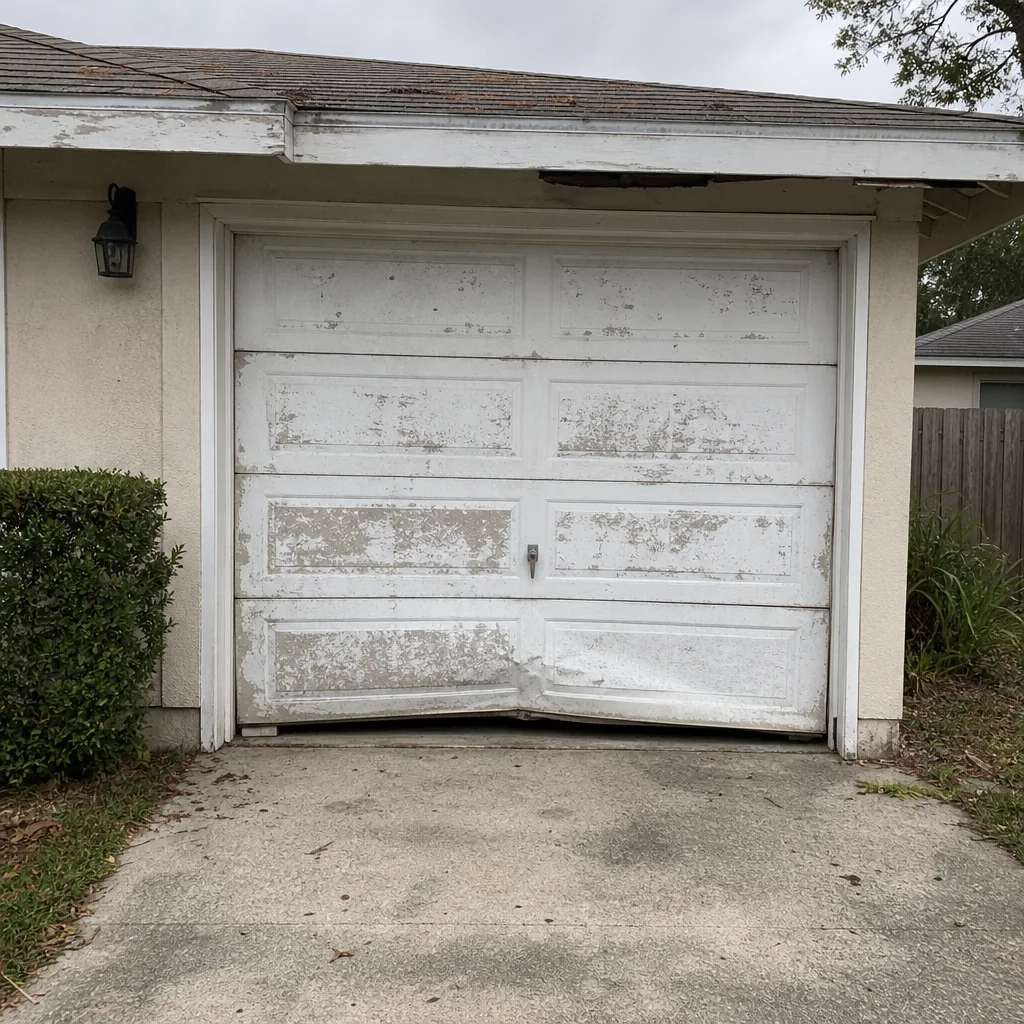 Before
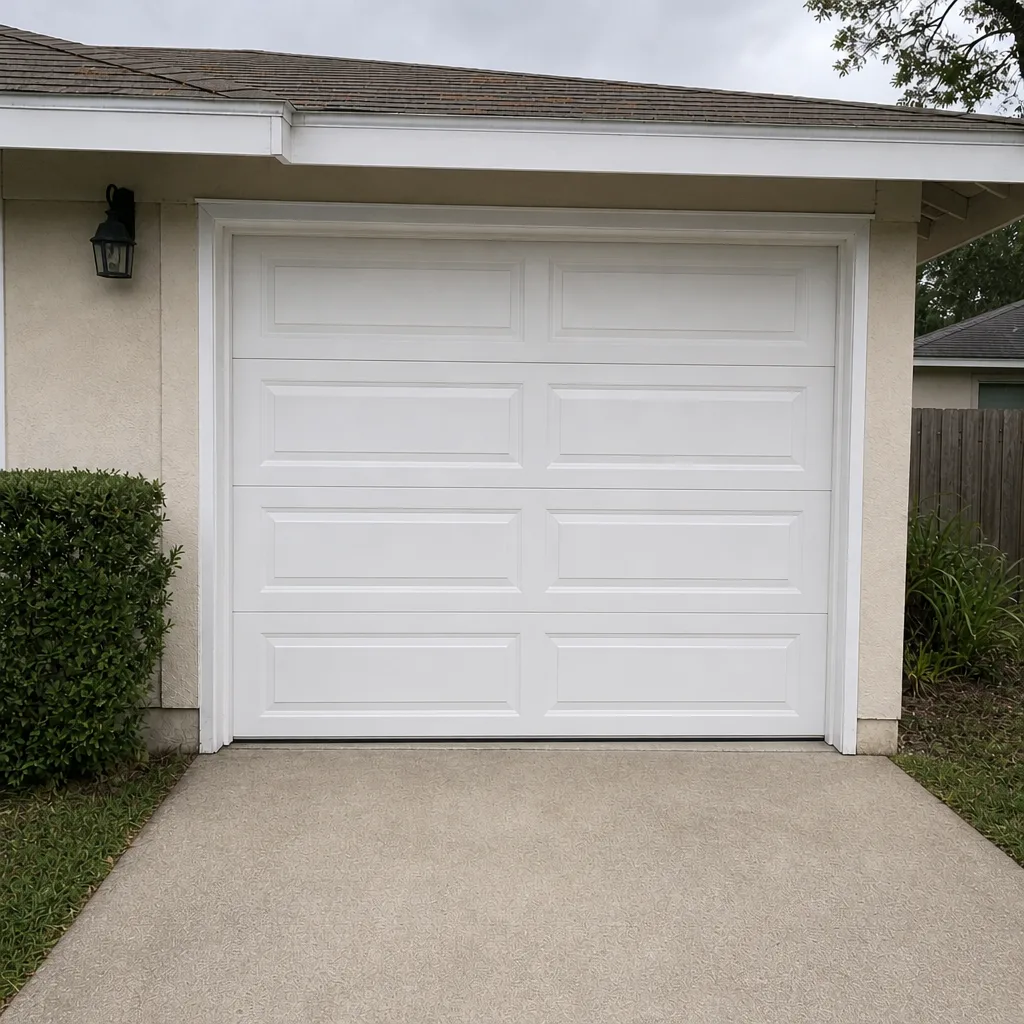 After
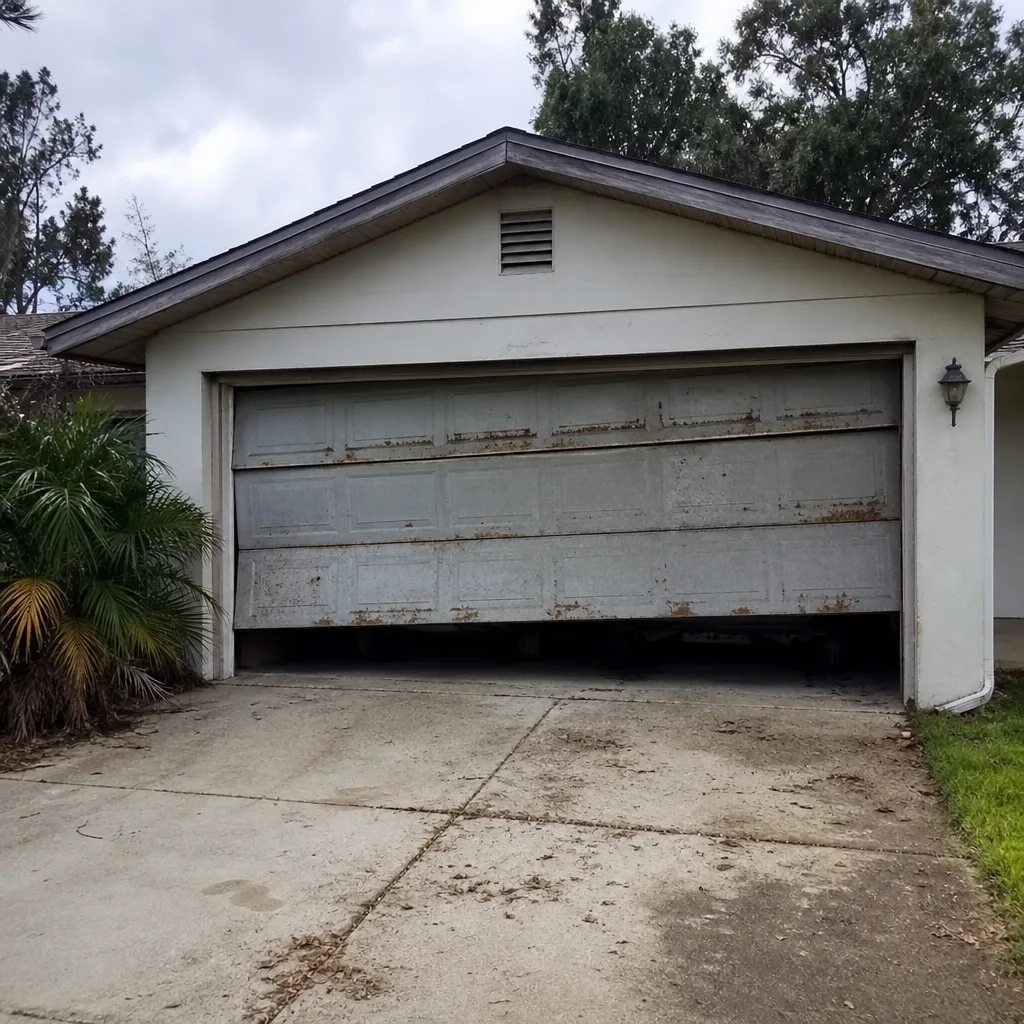 Before
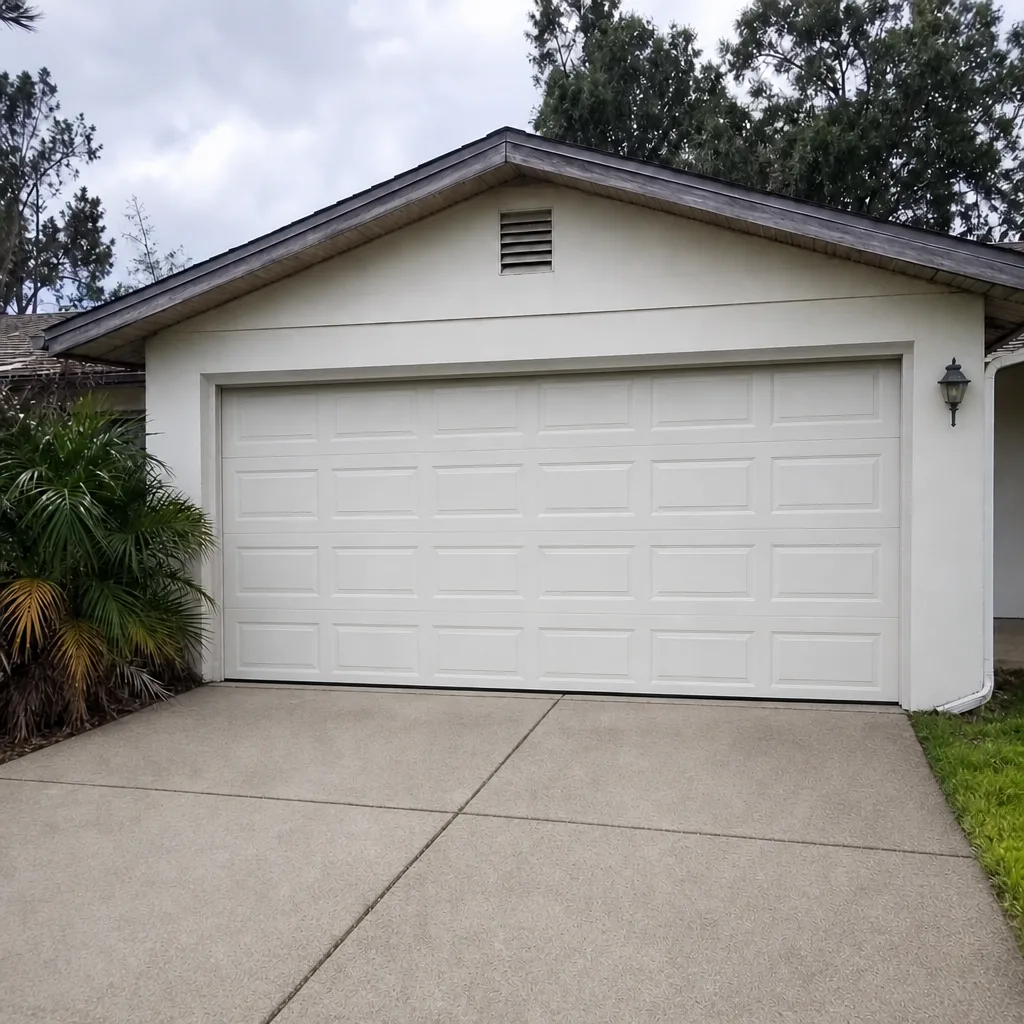 After
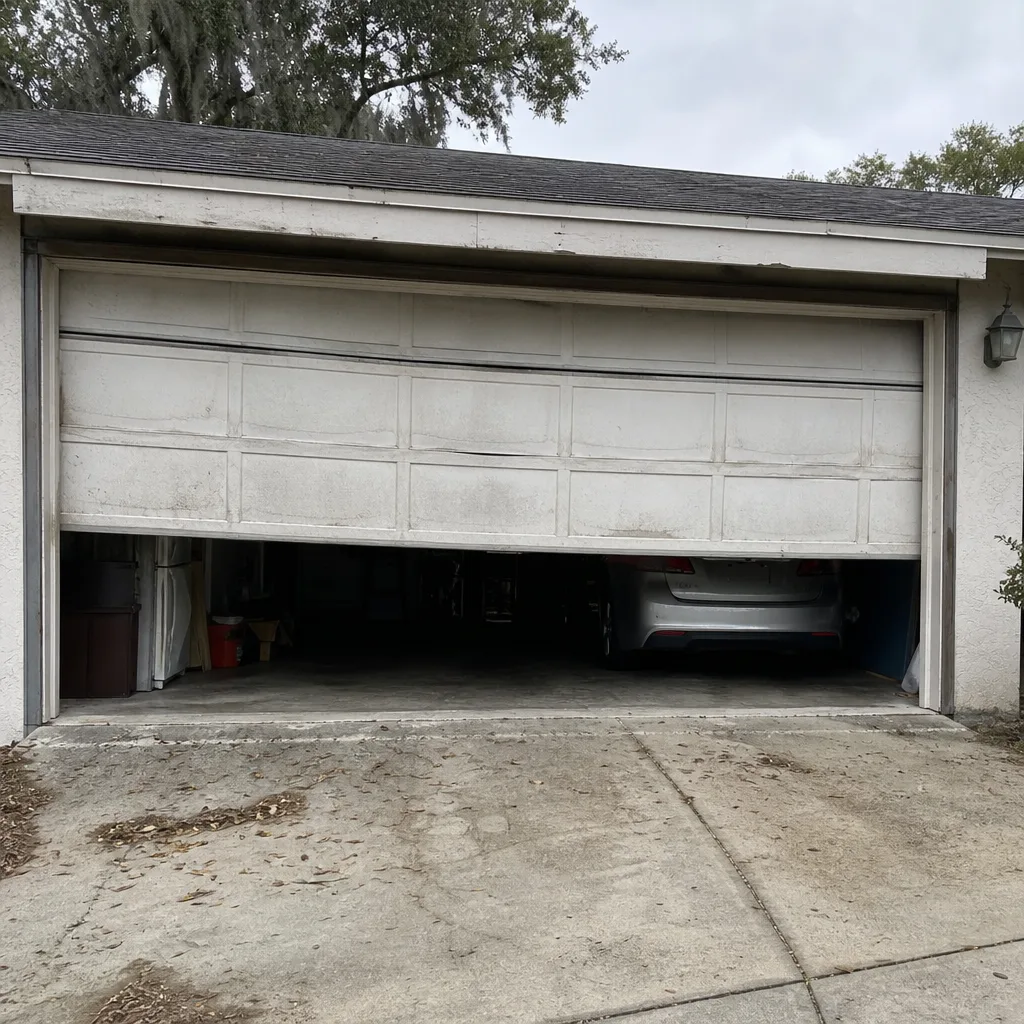 Before
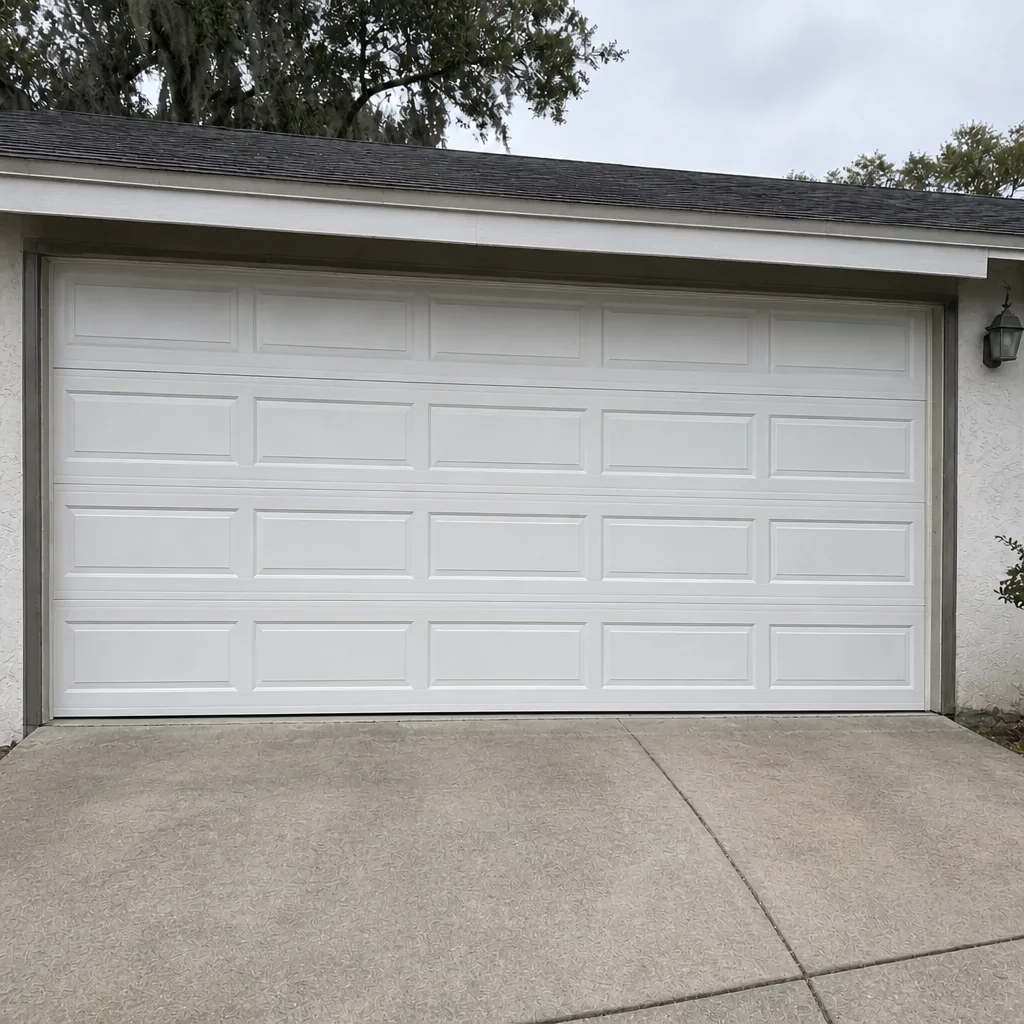 After
Common Mistakes to Avoid
- Treating a spring replacement like a YouTube tutorial. A spring is a piece of stored mechanical energy, not a bolt. Attempting the swap without proper winding bars and torque knowledge is one of the few household repairs that can cause serious injury. Call a specialist instead.
- Skipping the permit on a new installation. Florida garage door installations often require a permit, and skipping it creates a paperwork problem that can surface at a sale or inspection. Ask your city’s building department before you buy a door.
- Buying a door before checking the HOA. Many Fruit Cove-area HOAs have style and color rules. A door that isn’t approved can generate a notice and, in the worst case, a requirement to replace it again.
- Running the opener on a broken spring. The opener is designed to move a balanced door, not to lift the full weight itself. Running it in a failed state wears out the motor and can damage the door. Disconnect it and call.
- Replacing one spring out of a pair without thinking it through. Springs on the same door have usually done the same number of cycles. Replacing one and leaving the other is a short-term fix that often becomes a second repair soon after. A matched pair is the normal replacement.
- Adjusting a track while the door is under tension. The natural instinct is to bend the track back into place. On a loaded door, that’s how panels get twisted and doors drop. Close the door, disconnect it if safe, and leave the track to a technician.
- Assuming the missing weather seal is cosmetic. A worn bottom seal lets water and pests into a Fruit Cove garage. It’s inexpensive to replace, easy to install yourself, and worth doing before the rainy season rather than after.
When to Call a Professional
Call a professional when any of these are true: a spring has broken, the door is off its track, a cable is loose or snapped, the door won’t close fully or won’t lift, the opener is straining or reversing, or you’re planning a new door or opener installation. In each case, the work involves stored energy, structural mounting, or compliance obligations that start with a licensed technician. Emergency garage door service is a real need, especially when a door is stuck open and a home is exposed, and it’s worth knowing that our service includes that capability. Fruit Cove Garage Door Repair offers free estimates in Fruit Cove. Call (866) 481-7215. We answer 24/7. Fast dispatch from 7am to 7pm, Sunday through Friday. The estimate is free and the written quote sets the price before any work starts.
Frequently Asked Questions
It depends on your city’s permit requirements, and many Florida municipalities require a permit for a new installation. Permit rules are set locally, so check with your city’s building department before you buy or install. A licensed installer will handle the permit and wind-load documentation as part of the job.
You shouldn’t. A torsion spring stores enough energy to cause serious injury, and the correct replacement depends on the door’s weight and spring cycle rating rather than its appearance. Our technicians have up to 11 years of experience with this work specifically, and they carry the proper winding tools. If your spring is broken, keep the door closed and call us.
It can, because many Florida policies include a wind-mitigation credit tied to the home’s wind-resistive features, and the garage door is part of that assessment. An installation that doesn’t meet the door’s wind-load rating can put that credit at risk. Ask your insurer about their requirements, and confirm any installation meets the specs.
Yes. Clear the garage floor, have the door and opener manuals ready with model numbers, write down the exact symptoms, and make sure the disconnect cord is reachable. Handling simple parts yourself, like weather seals and remote batteries, also keeps small jobs off the repair list entirely.
It depends on the job, and the written estimate sets the final price. Spring replacements, opener repairs, and track work each fall into a different range, and a single spring costs roughly half what a matched pair costs since both are usually replaced together. Call (866) 481-7215 for an exact quote. Estimates are free.
Yes, for repair work we aim for same-day service. Call (866) 481-7215. We answer 24/7, with fast dispatch from 7am to 7pm, Sunday through Friday. Installation work is measured, ordered, and scheduled, so that starts with a free measure and a written quote.
The Bottom Line
The DIY-versus-pro decision on a garage door isn’t about whether you’re handy. It’s about which tasks are safe, which ones carry insurance and permit consequences in Florida, and which ones are cheaper to have done right the first time. Lubrication, seals, sensors, and visual checks are yours to handle. Springs, cables, track realignment, and new installations are not. In Fruit Cove, the extra variable is compliance: permits, wind-load ratings, and HOA rules all reward a professional installation. When the door won’t move, or when the spring has snapped, one call covers it. We work on your brand across the major manufacturers, and the estimate is free.
Written by the team at Fruit Cove Garage Door Repair.